
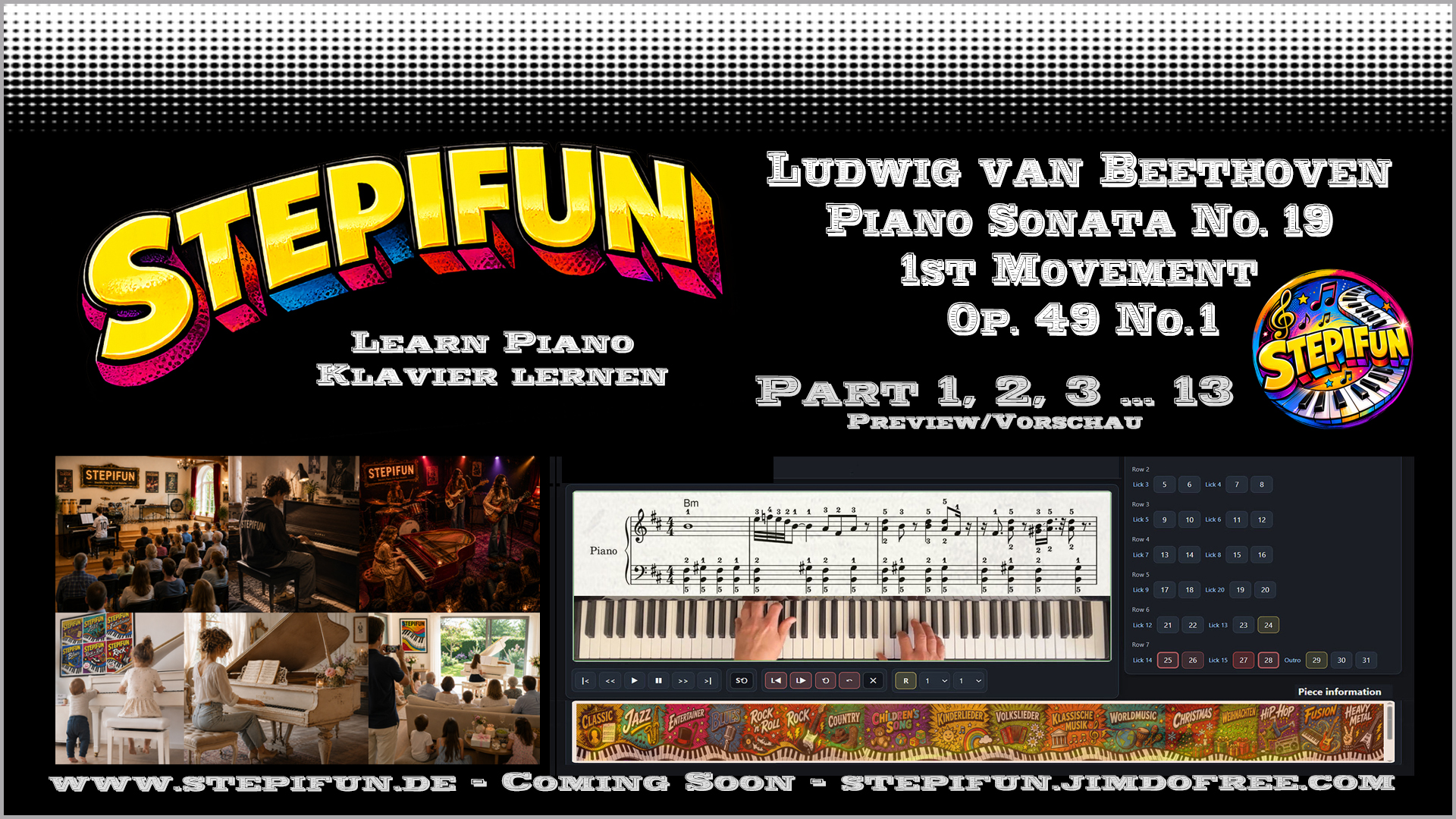
Piano Sonate Nr. 19 Piano Sonata No. 19
Ludwig van Beethoven Ludwig van Beethoven
Satz 1 · Tempo 80 Movement 1 · Tempo 80
Übungsabschnitte 1–13 Practice Sections 1–13

Ludwig van Beethoven Ludwig van Beethoven
Satz 1 · Tempo 80 Movement 1 · Tempo 80
Übungsabschnitte 1–13 Practice Sections 1–13
Direkt zur den aktuellen Fassung in der Bibliothek. Go directly to the current versions in the Library.
Das Lernen von längeren Klavierstücken erfordert eine strukturierte Herangehensweise, um Frust zu vermeiden und maximale Sicherheit beim Spielen zu erlangen.
Das Aufteilen in kleine Abschnitte und das Üben im langsamen Tempo sind dabei die effektivsten Werkzeuge für nachhaltigen Erfolg.
Learning longer piano pieces requires a structured approach, in order to avoid frustration and achieve maximum confidence while playing.
Breaking the music into small sections and practising at a slow tempo are among the most effective tools for lasting progress.
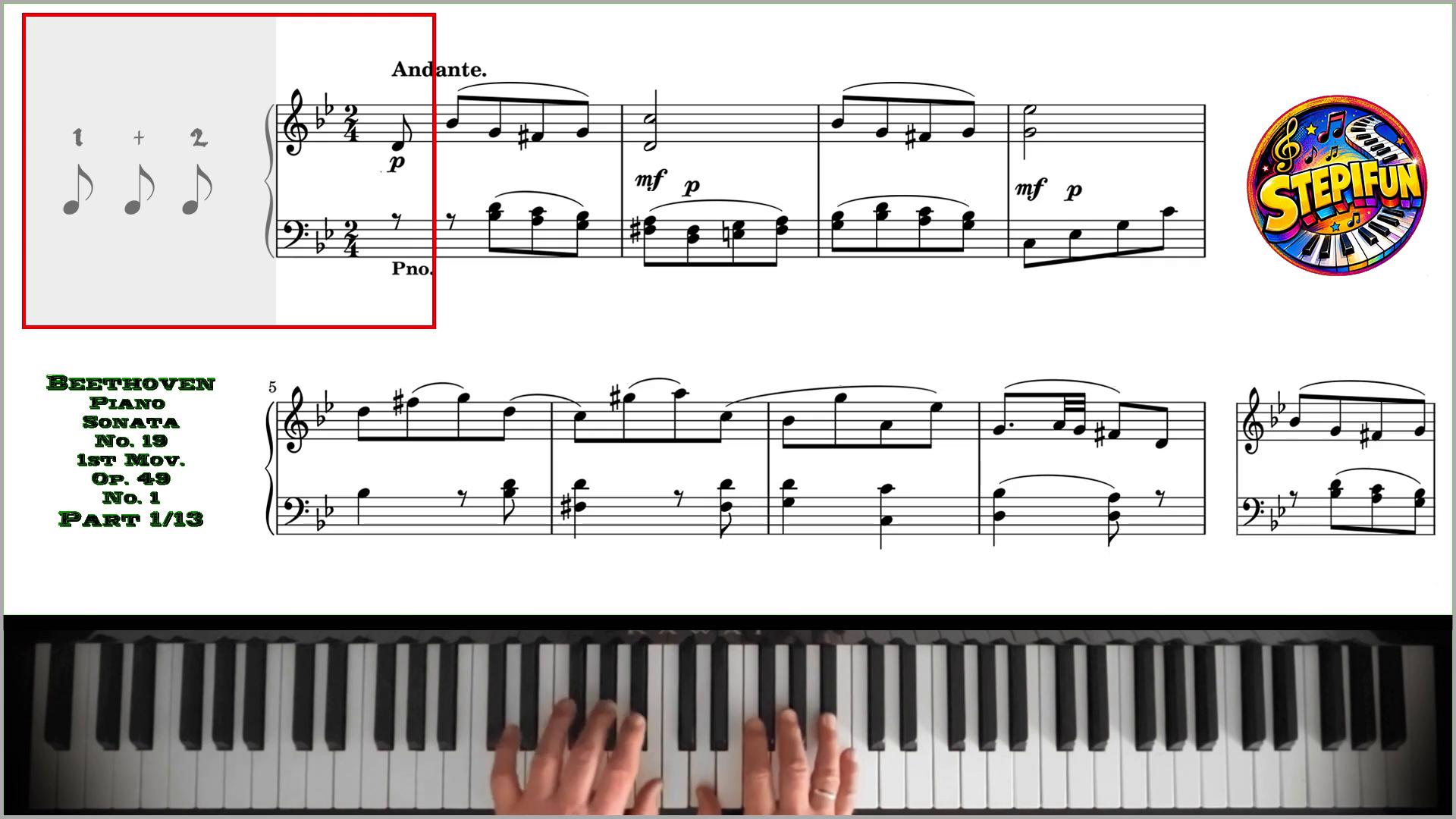
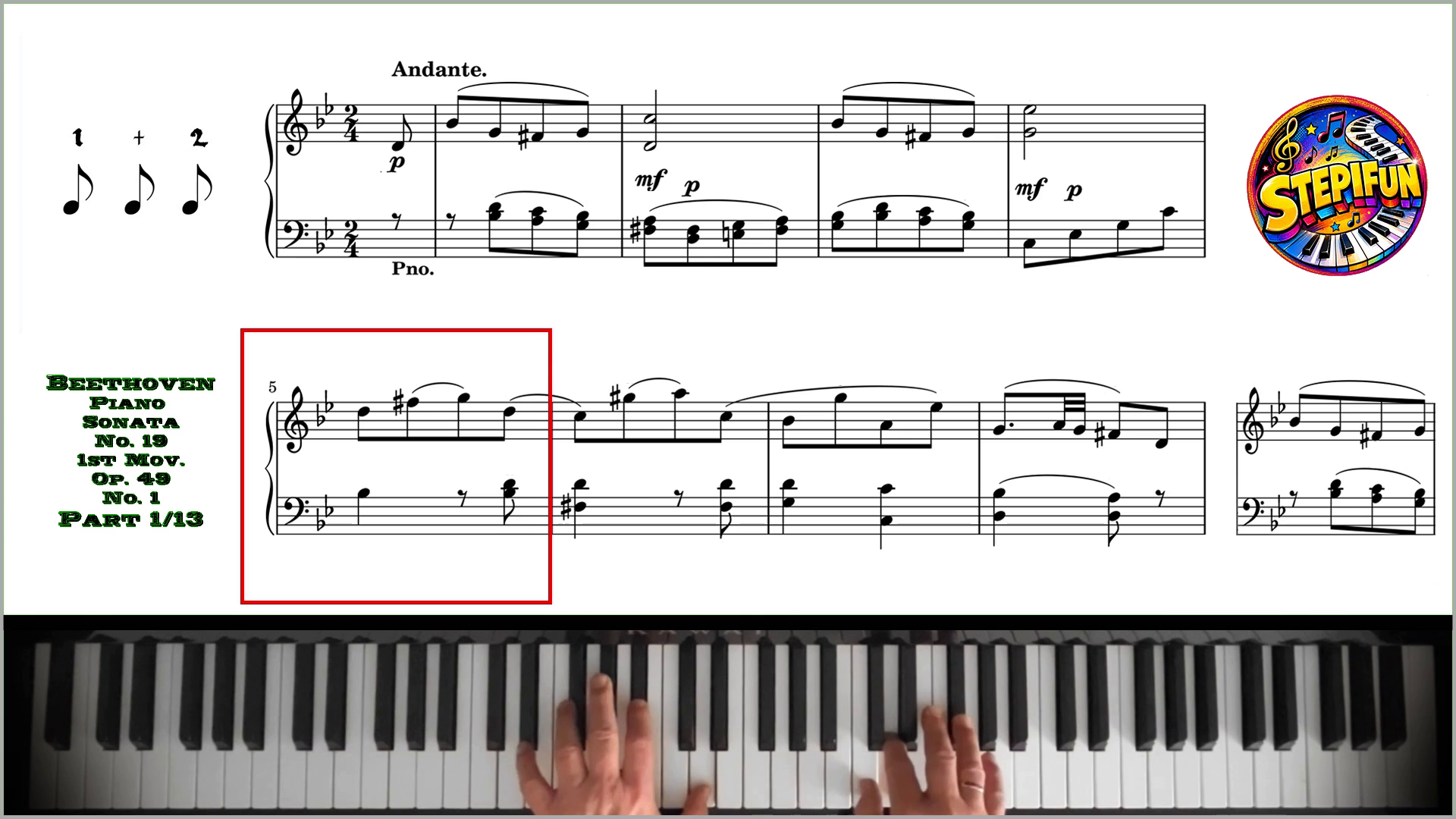
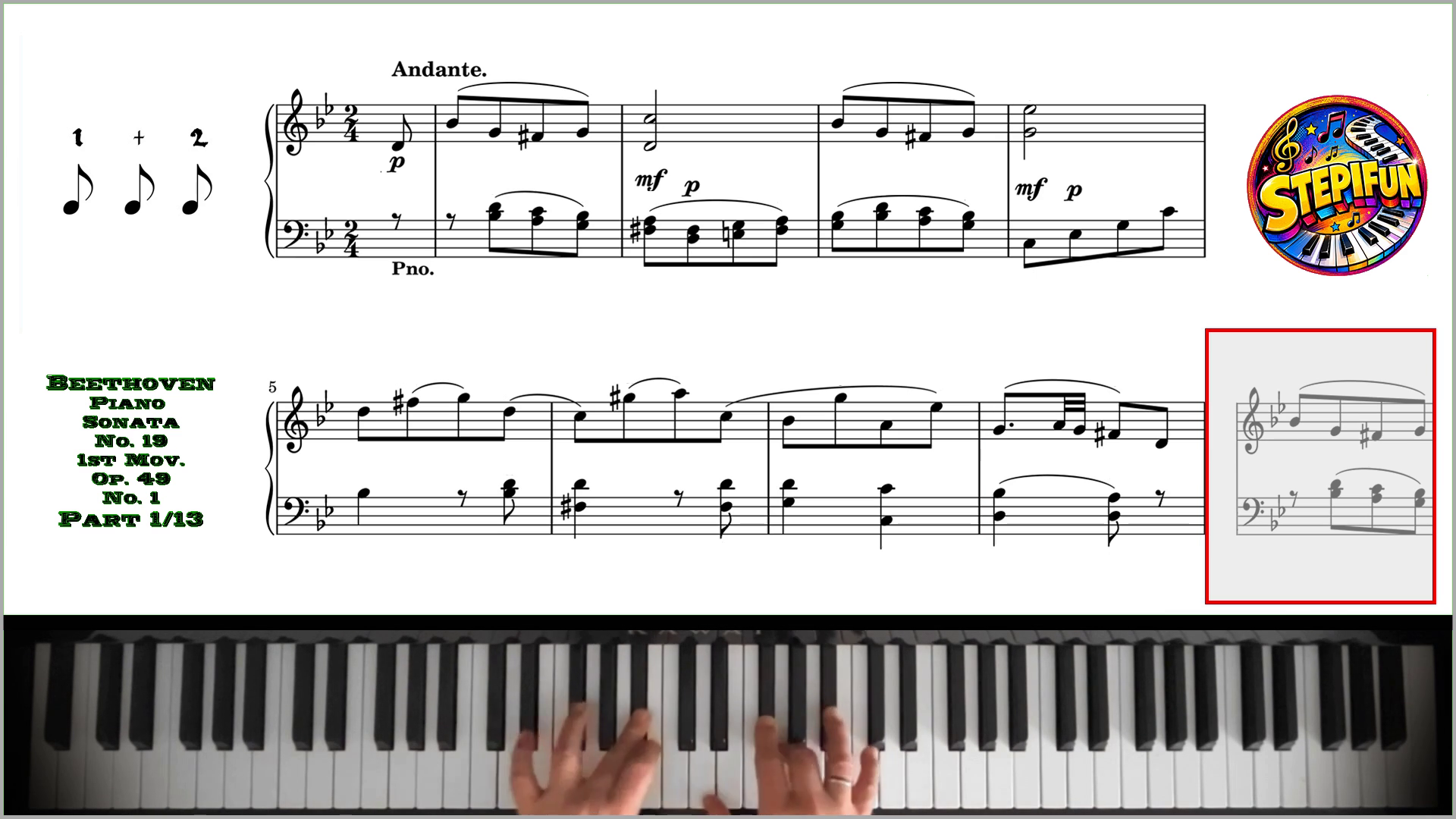
Abschnitt 1, Takt 1-8
Tempo 80 mit Metronom und Anzähler.
Piano Sonate Nr. 19, Satz 1, Opus 49, Nr. 1, Andante: Übungsabschnitte
Part 1, Measure 1-8
Tempo 80 with click and count in.
Piano Sonata No. 19, Movement 1, Opus 49, No. 1, Andante: Practice Sections
Abschnitt 2, Takt 9-15
Tempo 80 mit Metronom und Anzähler.
Piano Sonate Nr. 19, Satz 1, Opus 49, Nr. 1, Andante: Übungsabschnitte
Part 2, Measure 9-15
Tempo 80 with click and count in.
Piano Sonata No. 19, Movement 1, Opus 49, No. 1, Andante: Practice Sections
Abschnitt 3, Takt 16-24
Tempo 80 mit Metronom und Anzähler.
Piano Sonate Nr. 19, Satz 1, Opus 49, Nr. 1, Andante: Übungsabschnitte
Part 3, Measure 16-24
Tempo 80 with click and count in.
Piano Sonata No. 19, Movement 1, Opus 49, No. 1, Andante: Practice Sections
Abschnitt 4, Takt 25-33
Tempo 80 mit Metronom und Anzähler.
Piano Sonate Nr. 19, Satz 1, Opus 49, Nr. 1, Andante: Übungsabschnitte
Part 4, Measure 25-33
Tempo 80 with click and count in.
Piano Sonata No. 19, Movement 1, Opus 49, No. 1, Andante: Practice Sections
Abschnitt 5, Takt 34-39
Tempo 80 mit Metronom und Anzähler.
Piano Sonate Nr. 19, Satz 1, Opus 49, Nr. 1, Andante: Übungsabschnitte
Part 5, Measure 34-39
Tempo 80 with click and count in.
Piano Sonata No. 19, Movement 1, Opus 49, No. 1, Andante: Practice Sections
Abschnitt 6, Takt 40-47
Tempo 80 mit Metronom und Anzähler.
Piano Sonate Nr. 19, Satz 1, Opus 49, Nr. 1, Andante: Übungsabschnitte
Part 6, Measure 40-47
Tempo 80 with click and count in.
Piano Sonate Nr. 19, Movement 1, Opus 49, No. 1, Andante: Practice Sections
Abschnitt 7, Takt 48-55
Tempo 80 mit Metronom und Anzähler.
Piano Sonate Nr. 19, Satz 1, Opus 49, Nr. 1, Andante: Übungsabschnitte
Part 7, Measure 48-55
Tempo 80 with click and count in.
Piano Sonata No. 19, Movement 1, Opus 49, No. 1, Andante: Practice Sections
Abschnitt 8, Takt 56-64
Tempo 80 mit Metronom und Anzähler.
Piano Sonate Nr. 19, Satz 1, Opus 49, Nr. 1, Andante: Übungsabschnitte
Part 8, Measure 56-64
Tempo 80 with click and count in.
Piano Sonata No. 19, Movement 1, Opus 49, No. 1, Andante: Practice Sections
Abschnitt 9, Takt 65-72
Tempo 80 mit Metronom und Anzähler.
Piano Sonate Nr. 19, Satz 1, Opus 49, Nr. 1, Andante: Übungsabschnitte
Part 9, Measure 65-72
Tempo 80 with click and count in.
Piano Sonata No. 19, Movement 1, Opus 49, No. 1, Andante: Practice Sections
Abschnitt 10, Takt 73-80
Tempo 80 mit Metronom und Anzähler.
Piano Sonate Nr. 19, Satz 1, Opus 49, Nr. 1, Andante: Übungsabschnitte
Part 10, Measure 73-80
Tempo 80 with click and count in.
Piano Sonata No. 19, Movement 1, Opus 49, No. 1, Andante: Practice Sections
Abschnitt 11, Takt 81-89
Tempo 80 mit Metronom und Anzähler.
Piano Sonate Nr. 19, Satz 1, Opus 49, Nr. 1, Andante: Übungsabschnitte
Part 10, Measure 81-89
Tempo 80 with click and count in.
Piano Sonata No. 19, Movement 1, Opus 49, No. 1, Andante: Practice Sections
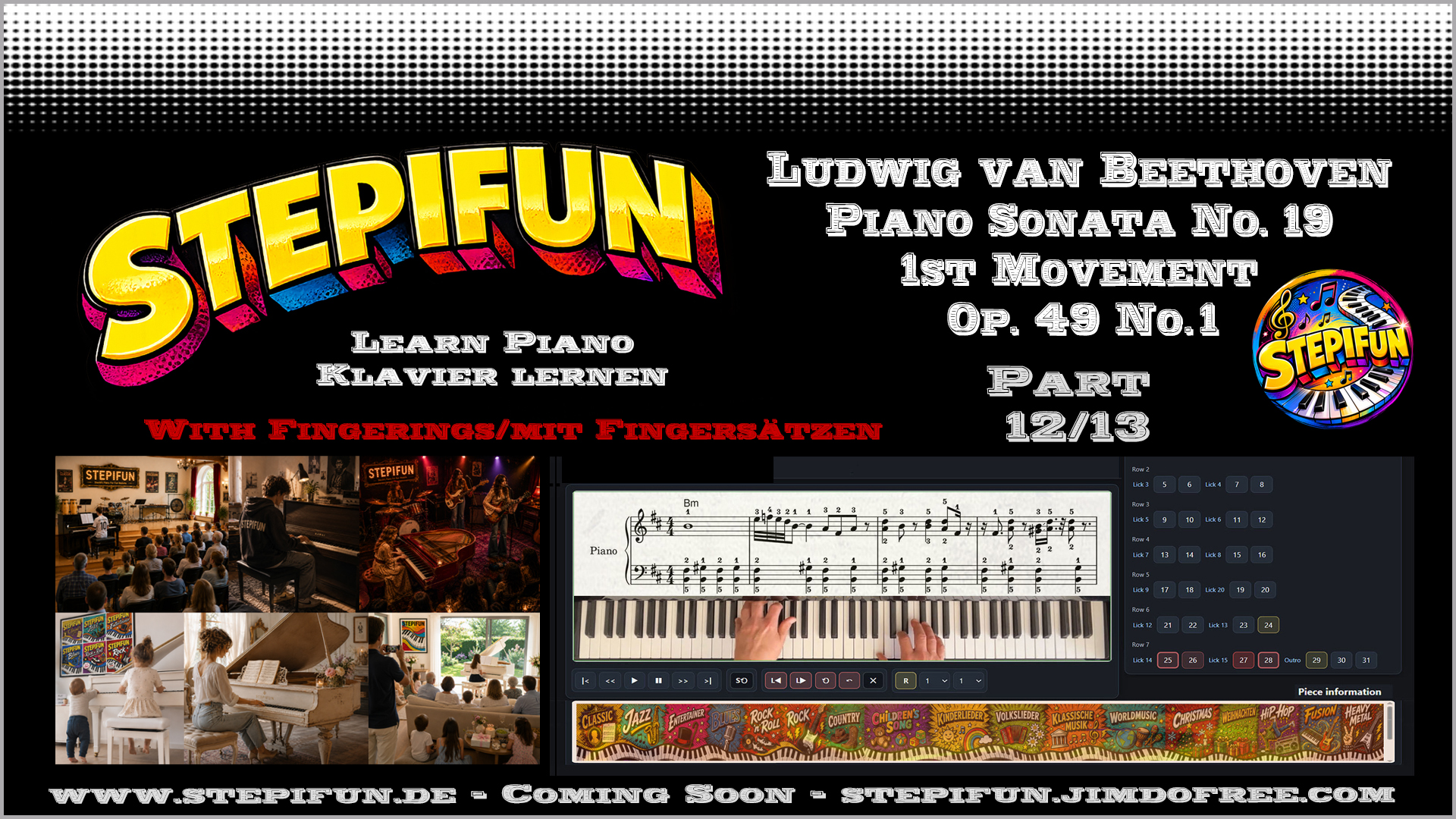
Abschnitt 12, Takt 90-97
Tempo 80 mit Metronom und Anzähler.
Piano Sonate Nr. 19, Satz 1, Opus 49, Nr. 1, Andante: Übungsabschnitte
Part 10, Measure 90-97
Tempo 80 with click and count in.
Piano Sonata No. 19, Movement 1, Opus 49, No. 1, Andante: Practice Sections
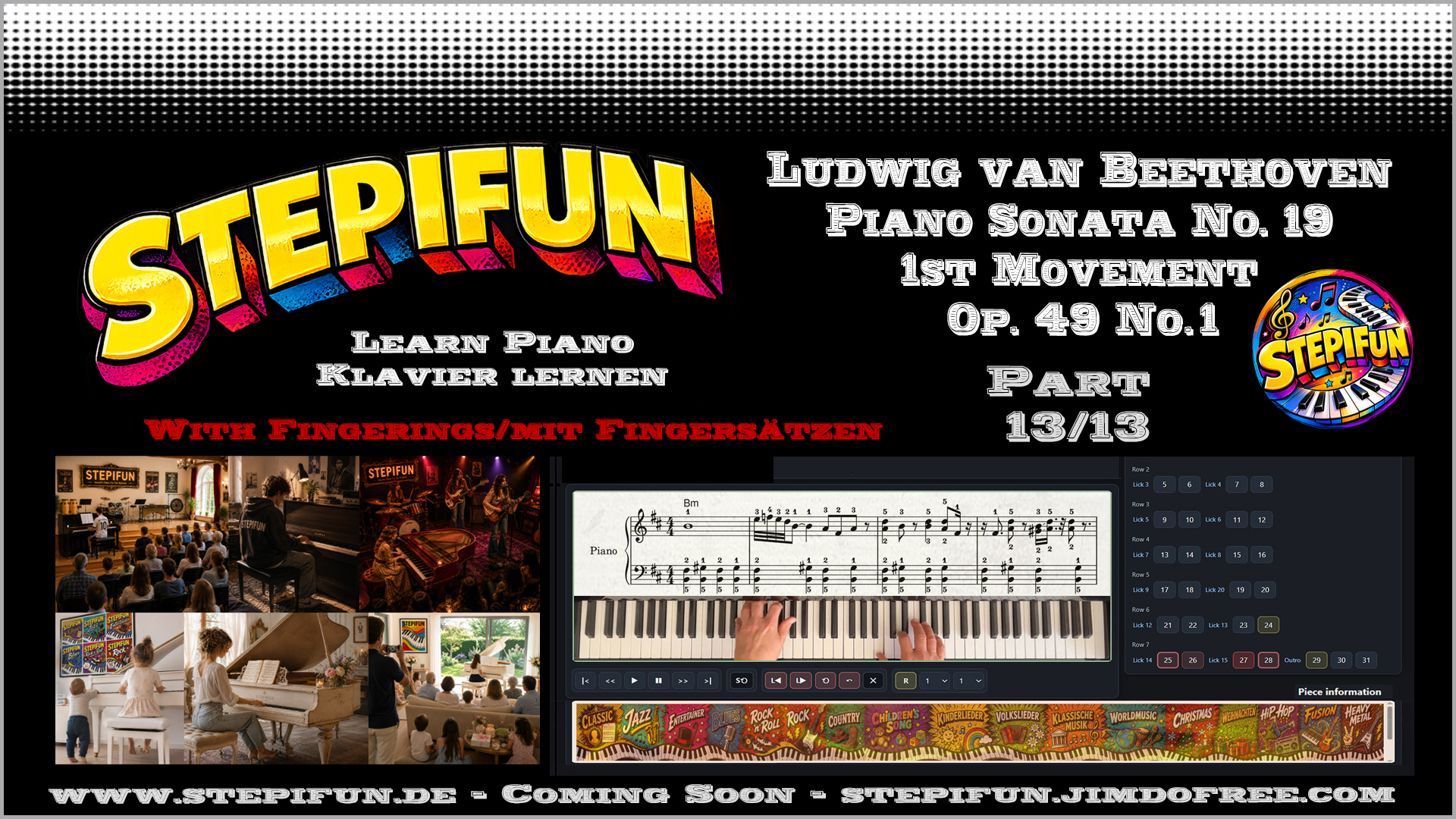
Abschnitt 13, Takt 98-111
Tempo 80 mit Metronom und Anzähler.
Piano Sonate Nr. 19, Satz 1, Opus 49, Nr. 1, Andante: Übungsabschnitte
Part 13, Measure 98-111
Tempo 80 with click and count in.
Piano Sonata No. 19, Movement 1, Opus 49, No. 1, Andante: Practice Sections
Wer versucht, ein langes Stück von vorne bis hinten am Stück zu lernen, bleibt oft in der Mitte stecken.
Musikalische Phrasen isolieren: Unterteile das Stück in logische Abschnitte. Das können 4 bis 8 Takte sein, manchmal auch nur ein einzelner Taktübergang.
Schwierige Stellen zuerst: Warte nicht, bis du bei den schweren Passagen ankommst. Nutze deine frische Energie am Anfang einer Übeeinheit für die Knackpunkte.
Die Nahtstellen üben: Verbinde die Abschnitte ganz bewusst, indem du den jeweils letzten Takt des alten und den ersten Takt des neuen Abschnitts zusammen übst.
Anyone who tries to learn a long piece from beginning to end in one continuous process often gets stuck somewhere in the middle.
Isolate musical phrases: Divide the piece into logical sections. These may consist of 4 to 8 bars, or sometimes just a single transition between two bars.
Practise difficult passages first: Do not wait until you eventually reach the challenging sections. Use your fresh energy at the beginning of a practice session for the most difficult passages.
Practise the transitions: Connect the sections deliberately by practising the last bar of the previous section together with the first bar of the next one.
Langsames Üben ist kein Zeichen von Schwäche, sondern das Geheimnis der Profis. Es gibt deinem Gehirn und deinen Muskeln Zeit, die Bewegungsabläufe fehlerfrei abzuspeichern.
Präzises Notenlesen: Im Schneckentempo hast du Zeit, Vorzeichen, Rhythmus und Fingersätze exakt zu erfassen. Falsch eingestellte Fingersätze später zu korrigieren, kostet doppelt so viel Zeit.
Muskelgedächtnis aufbauen: Dein Körper lernt Bewegungen durch fehlerfreie Wiederholung. Spielst du zu schnell und machst Fehler, lernt dein Muskelgedächtnis den Fehler mit.
Metronom nutzen: Steigere das Tempo erst, wenn du den Abschnitt im langsamen Tempo fünfmal hintereinander fehlerfrei spielen kannst. Erhöhe das Metronom dann nur in kleinen Schritten, zum Beispiel um 2 bis 5 BPM.
Practising slowly is not a sign of weakness, but one of the secrets of professional playing. It gives your brain and muscles the time they need to store the movements accurately and without mistakes.
Read the music precisely: At a very slow tempo, you have time to pay close attention to accidentals, rhythm and fingering. Correcting poor fingering later usually takes much more time.
Build muscle memory: Your body learns movements through accurate repetition. If you play too fast and make mistakes, your muscle memory learns those mistakes as well.
Use a metronome: Increase the tempo only when you can play the section correctly five times in a row at a slow tempo. Then raise the metronome only in small steps, for example by 2 to 5 BPM.
Dieses methodische Vorgehen – das Zerlegen in Abschnitte, das langsame Üben und das Analysieren von Aufnahmen – ist eine reine Lernhilfe und ein Werkzeug für den Übeprozess. Es ist das Fundament, auf dem die spätere Kunst entsteht, aber es ist noch nicht das fertige Musizieren selbst.
Geduld ist die schnellste Abkürzung: Es fühlt sich paradox an, aber wer langsam übt, lernt das Stück am Ende deutlich schneller. Wer zu früh im Originaltempo spielt, schleift Fehler ein. Das spätere Ausbügeln dieser „Fehlerteufel“ dauert oft deutlich länger als ein langsamer, solider Aufbau von Anfang an.
Das Gehirn lernt auch in den Pausen: Beim langsamen Üben entstehen stabile neuronale Verknüpfungen. Ein Teil der Festigung erfolgt in den Pausen und während des Schlafs. Deshalb kann es vorkommen, dass ein Abschnitt am Abend noch unsicher wirkt und am nächsten Morgen plötzlich deutlich leichter gelingt.
Vom Handwerk zur Kunst wechseln: Sobald die Lernhilfe ihren Zweck erfüllt hat – die Finger wissen, wohin sie müssen, und die Noten sind verstanden –, verändert sich der Schwerpunkt. Das Metronom kann in den Hintergrund treten, die Abschnitte werden zu größeren musikalischen Zusammenhängen verbunden und die eigene Interpretation rückt stärker in den Vordergrund. Erst dann wird aus dem sicheren Spielen zunehmend echtes Musizieren.
Man sollte diese Methode deshalb niemals mit dem finalen Vortrag verwechseln. Sie ist wie ein Baugerüst, das beim Aufbau hilft. Wenn das musikalische Fundament steht, darf dieses Gerüst nach und nach verschwinden.
This methodical approach – dividing the piece into sections, practising slowly and analysing recordings – is purely a learning aid and a tool for the practice process. It provides the foundation on which the later artistic interpretation can be built, but it is not yet the finished musical performance itself.
Patience is the fastest shortcut: It may feel paradoxical, but those who practise slowly often learn a piece more quickly in the end. Playing at the original tempo too early can reinforce mistakes. Correcting these ingrained errors later often takes considerably longer than building the piece carefully and securely from the beginning.
The brain also learns during breaks: Slow practice helps create stable neural connections. Part of the consolidation process takes place during breaks and while we sleep. This is why a passage that still feels uncertain in the evening may suddenly feel much easier the next morning.
Move from craft to art: Once the learning tools have done their job – the fingers know where to go and the notes have been understood – the focus begins to change. The metronome can move into the background, the individual sections are connected into larger musical structures, and personal interpretation becomes more important. Only then does secure playing increasingly become real music-making.
This method should therefore never be confused with the final performance. It is like scaffolding used during construction. Once the musical foundation is in place, the scaffolding can gradually be removed.
Das Hineinhören in bekannte Aufnahmen großer Pianistinnen und Pianisten ist ein mächtiges Werkzeug für die Interpretation, sollte aber bewusst und mit Bedacht eingesetzt werden.
Struktur und Bogen verstehen: Aufnahmen helfen dabei, die Architektur eines Stücks zu begreifen. Wo liegt der Höhepunkt? Wie atmet die Melodie?
Klangvorstellung entwickeln: Du hörst, wie professionelle Pianistinnen und Pianisten Dynamik, Artikulation und Pedal einsetzen. Das schult das Gehör und hilft dabei, eine eigene Vorstellung vom Klang des Stücks zu entwickeln.
Die Gefahr der Kopie vermeiden: Höre dir möglichst verschiedene Interpretationen an, zum Beispiel von Glenn Gould und Martha Argerich. So wird deutlich, wie viel künstlerische Freiheit im Notentext steckt. Das hilft dabei, eine eigene Vorstellung des Stücks zu entwickeln, statt lediglich eine bestehende Interpretation zu imitieren.
Listening closely to well-known recordings by great pianists is a powerful tool for developing an interpretation, but it should be used consciously and thoughtfully.
Understand structure and musical shape: Recordings can help you understand the architecture of a piece. Where is the climax? How does the melody breathe?
Develop a sense of sound: You can hear how professional pianists use dynamics, articulation and pedal. This trains your ear and helps you develop your own idea of how the piece should sound.
Avoid simply copying: Listen to several different interpretations whenever possible, for example by Glenn Gould and Martha Argerich. This reveals how much artistic freedom exists within the written score. It helps you develop your own understanding of the piece instead of merely imitating an existing interpretation.